Sep
02
2010
I finished up the work on the WVO car controller. I built a test stand to simulate all the connections and switches of the car and dang it, the thing worked as I originally designed it. I dont know why I thought it was a bad design. After a few hours work on the timer circuit it now works perfectly.
Basically, in AUTO, the WVO system now waits for the coolant water to get up to 60C, turns on the oil supply valves, turns on an electric oil heater to keep the oil a minimum of 50C (it cycles as necessary).
If the fuel in the supply tank gets to 1 gal, it shuts everything down.
When the car is turned off in AUTO the system closes the oil valves and keeps the engine running for 30 sec to purge out the WVO before it turns the car off. Very cool… The next step is to install LED’s and the switch in the dash with some nice lettering to make it look good. It is amazing to me that a commercial unit which does the same thing this does cost $350. Mine cost about $25.

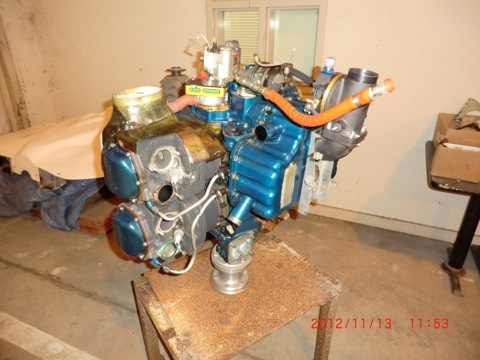
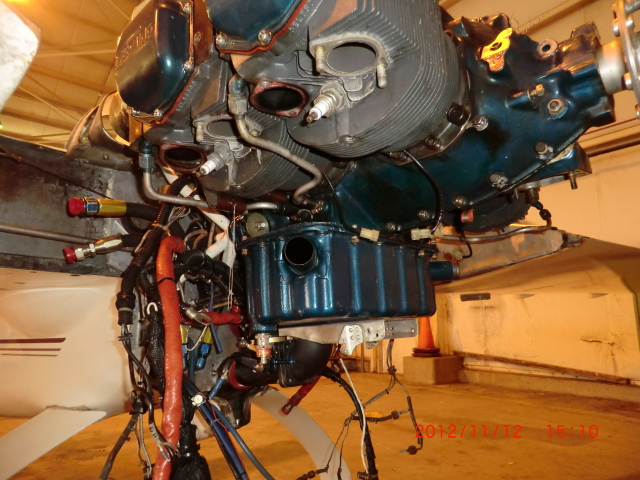
The engine is now on the plane. It really looks good now with the newly painted engine mount and engine.

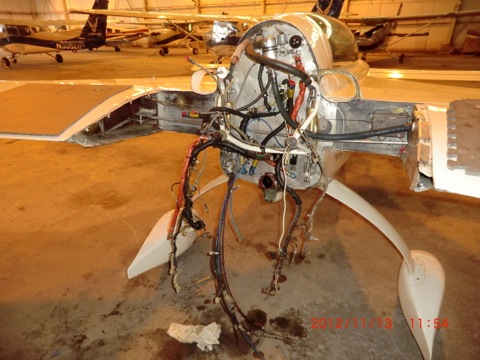
The is a close up of the firewall penetrations. After all the wires are run, I will clamp the firestop tubing around the wires.

The insturment panel came back to me unletter but with some nice glass work done around the leg openings and radios. I spent all day fitting the radios to the panel so they would have exactly 1/4″ exposure from the panel.

Tommorow, I’ll finish screwing the radio boxes to the panel and some other detail work which needs to be done prior to sending it off to be lettered.
Aug
23
2010
Yesterday started off with a quick 10 minute trip to a “Flyin Breakfast” at Monks Corner. I helped a little with the food and setup, but mainly I just enjoyed a great early morning flight which was very nice.
I wanted to show you the progress on the the construction of Boeing 787 Dreamliner plant. They are still adding to it. The size is just immense! I have to pass it to go to my hanger, so I see the progress on a regular basis.

Only about 40 people showed up at the breakfast. Not many planes either as I think the weather (low clouds) may have put some attendees off.

I took the opportunity yesterday to finish off the oil tank for my car. I spent hours welding aluminum and finally thing I am starting to “get it” on welding this metal. It certainly takes a lot of practice. At least the welds are not coming like big blobs or melting through. It takes a huge amount of current (175 A) and the TIG handle would get so hot I would have to let everything cool down ever 15 minutes. The inside of the tank is built with a baffle and a coil of 5/8″ Al tubing which I can circulate hot water through for additional heating of the cooking oil if I ever decide to use it (cold weather ops). I always like to plan ahead.

I have been using a 5 gal gas can for the last few months which conveniently fit into a well on the car for the cooking oil. It held 5 gal of oil and gave me a range of about 110 miles.

The new tank holds 8 gals of oil and it also has a low level alarm which activates at 1 gal. It looks a lot better than my red tank.

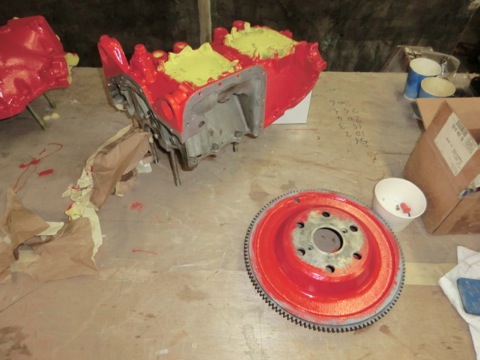
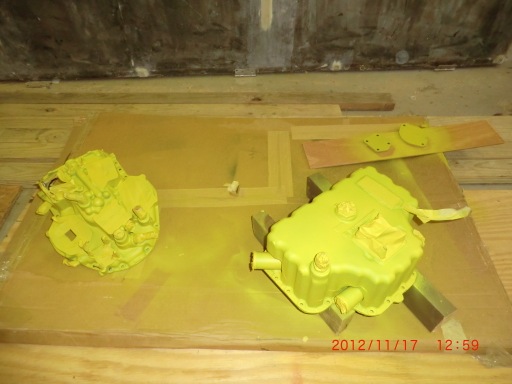
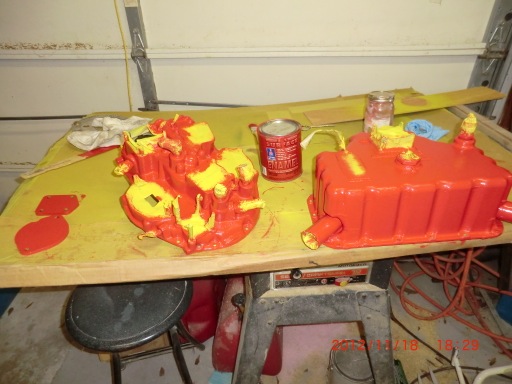
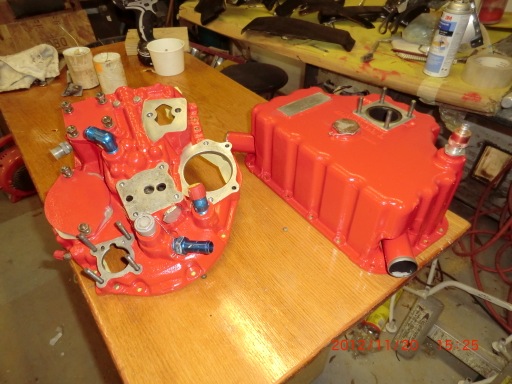
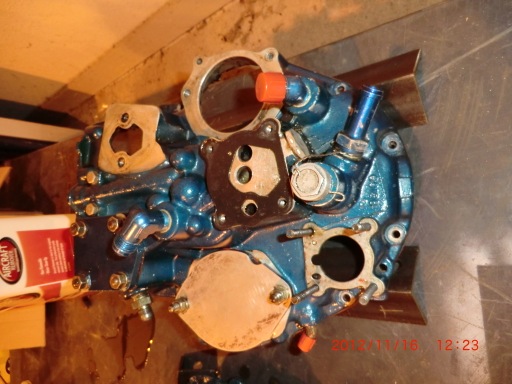
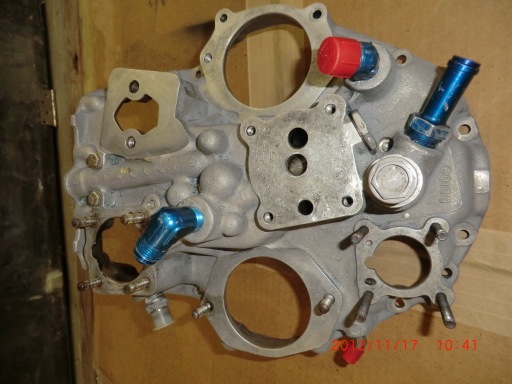
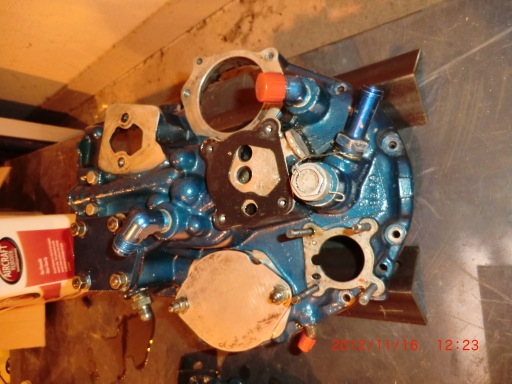
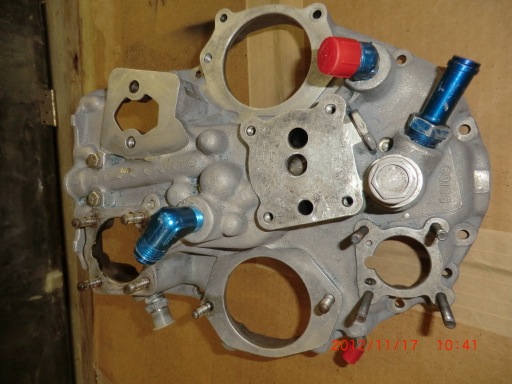
Speaking of red…. I wanted to paint the engine one color since the case was red and the accessory case was gray. It took a lot of time to paint but the engine is again one color. Tomorrow I’ll replace all the bolts with new ones .

The new look. Kind of like it..

Aug
20
2010
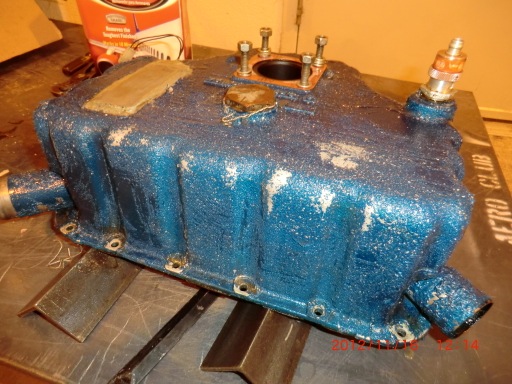
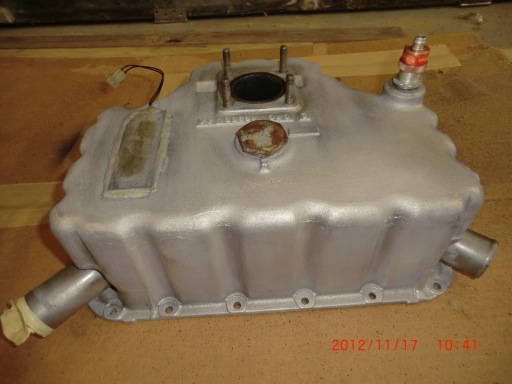
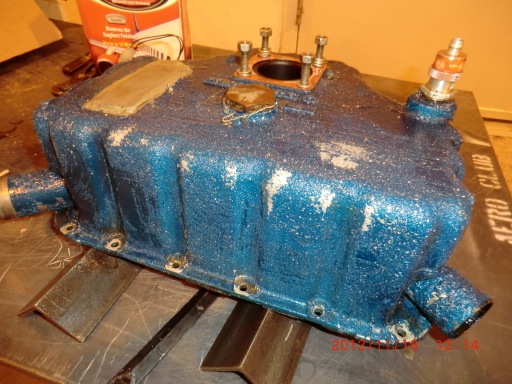
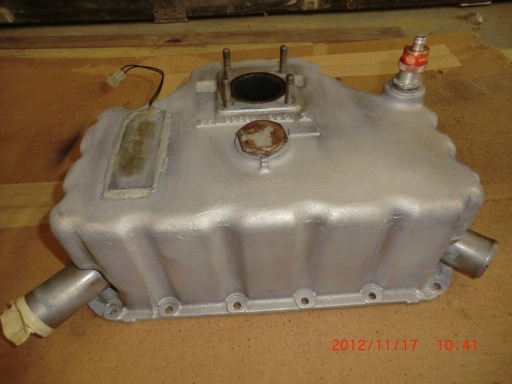
The oil pan is back from the machine shop. They only charged $80 for machining the flange flat. I hate oil leaks and I am sure it was worth the effort and money.

I have a long list of things to do from painting the engine accessory case to mounting ground blocks before I can put the engine back on the firewall. It was really to my advantage to take the engine off the plane (took less than 1 hr) to gain access to the firewall and the front of the engine.
This shows the firewall through bushings I made and installed. Since they are high temp fiberglass products, they are floxed into the firewall. They are nicely rounded on each end to prevent chafing of the wires and possible contact with the grounded firewall. The starter cable has over 600 amps flowing through it and I want to make sure there is no possible way to contact the firewall, ground out, and start a fire.

The bushings are 1″ long with a 1/2″ flange exposure into the engine compartment so I can put firestop on the end. In the unlikely event of an engine fire, the firestop will prevent fire/smoke from entering the cabin from the wire openings.

Aug
18
2010
Today I put in some long hours and got a lot of things done.
While sanding the engine mount to prep it for painting, I found an vent hole which had never been closed off because a support rod was in the way. I just drilled a second hole, welded it closed, filled the tube full of linseed oil and closed it off.


Since I had the engine mount off, I took the opportunity to close off any unnecessary hole in the fire wall. This was a big one the original owner had cut to allow for a DB-25 plug for the ignition system.

I tired welding, but the metal is so thin I just couldnt get a stable arc, the fiberfax just vaporizes and blows holes in the weld. Hum…what to do??

I decided to install cover plates over the holes with SS rivets. It worked out much better.

this plate closes off some holes used for the ignition system high tension leads.

There was a couple of big ones just below the cable pulley. Closed off too.

I finished painting the engine mount. Hopefully I’ll install it tomorrow if the paint is hard enough.

This is a one of four firewall bushing I machined out of a high temp fiberglass rod. I am using these bushing to for all wires going through the firewall to prevent any contact (shorting) of the wires. They are made long on the engine side so I can put a firestop sleeve over the exposed bushing and clamp it to the wires.

Aug
16
2010
I finally received the beautiful oil pan from Calif I designed. When I started to bolt it up to the oil pan I found out the fuel servo was hitting the engine mount??? WTF???? After I checking it out I found out the fabrication company had welded on the mounting flange at 5 deg not 10 deg as I specifically directed in the manufacturing drawing I sent. What to do. I thought about machining the flange to 10 deg, but decided against that coarse of action as it caused other mounting problems with the servo and finally chose to modify the engine mount instead.
Here you see the fuel servo hitting the mount. It still needs to move upward another 1/4″ to bolt on the oil pan…

The engine being removed from the mounts.

I chose to grind out part of the tube. The 4130 tube is .050″ thick and I was surprised to see LOTS of linseed oil in it as is required to prevent internal rust.

I welded on a plate of 4130 steel .063″ to the mount after grinding away the cross tube. It looks like it is ground at an angle but that is becuase the tube is tilted when mounted.
The finished clearance. I LOVE welding 4130 steel. If you want to get good at welding, just weld Aluminum for a while. It makes welding steel or stainless steel seem so easy a cave man can do it. I now have 3/8″ clearence all the way around the fuel servo. More than enough mount clearance.

Re-injecting about 1/4 cut of linseed oil back into the tube prior to sealing. Tomorrow I’ll take the oil pan to the machine shop to have the mounting flange machined flat (should have been done in CA) as it warped during the welding process and repaint the engine mount.

Total mod time 4 hrs.
Aug
15
2010
I have been getting more orders for fuel probes almost exclusively through word of mouth. Today I decided to mass produce a bunch of them to have an inventory of parts. I have changed my original design somewhat to account for the spacers I am now getting from Princeton Probes. It is supposed to save me building time. What a fiasco!
I made about 75 bases which took about 3 hrs. They looked great but unfortunately the holes ended up being too big even though I had drilled them severely undersized. Shit….

They are now trash. I even tried welding the tubes into the bases, but was not happy with the results. Welding the tubes to the bases is still a possibility, but I can not use the ones I made.

I did end up making about 14 probe bases (4 of which are sold).

Sum total of 8 hrs of work…. two probes completed.

My next step is to get some very small reamers and try liquid nitrogen to chill the tubes prior to insertion into the hot bases (creates a very tight bond of the two parts). Might also try threading the tubes. I hope that I can eventually come up with a better production methodology or I wont be able to make them at an affordable price. It wont be worth my time….
Apr
20
2010
Today is the last day of work before a business trip to Los Angles tomorrow. It is a fairly short one and I’ll be returning Friday night….
It was a very busy day today. First task of the day was shortening the oil dip stick tube. After cutting the tube to the correct length (and a little reduction of the diameter on the lathe, a PVC connector was used to glue the pieces together. A little black paint and it looks good and worked out very well. I made a test sample (using the old tube) and could not get it to fail. 
Glued and painted.

I have had to stop work on the engine compartment since I do not have a starter, alternator, oil pan, fuel servo or exhaust systems. All these are in CA being fine tuned and modified. That’s ok as it gives me time to focus in on other areas of the plane which needs attention.
I found the oil door to be hitting the inlet duct due to the off set hinge the orginal builder used. After a bit of frustration trying to make it work, I decided to just remove it and go back to a standard hinge style.

It was quick to do and worked out great since the leading edge of the door was somewhat flat which allowed for a longer hinge.

I also installed the bracket for the AHRS (electrionic gyro for the EFIS) and the Trio Autopilot pitch servo. I had to install the canard to take measurements and really liked the look of it on the plane. Installing the servo was interesting because I used my own instruction written years ago when I was a beta tester for Trio. I tried a couple of different configurations to get the servo installed and when finally successful, I wrote up the methodology for other builders. Naturally, I was a bit surprised at how well it worked and the clarity of the instruction. Sometime I surprise myself.
When I get back I am going to finish off the canard and get it into primer. I have completed almost all the glass work and installation of hardware so I am getting close to the painting stage.

***
Apr
19
2010
Today was a long day of work on the plane. It is hard to believe I have been working on the plane for a year and have put in 940 hrs on the project. The number of hours is not surprising given the plane was completely stripped of everything except the basic structure and an extreme amount of customization and design work done. I am determined to put out maximum effort for the next few months to get the project completed. Besides, I really want to fly the bird!
Tony stopped by to learn the finer details of installing engine cylinders.

Job well done! Doesnt he look happy.

Cylinders 2/4 are installed. I really like how the red crackle powder coating came out on the valve covers.

I needed to make a new bracket and bushings for the electronic ignition coils.

Simulated fuel injection lines were routed to determine the exact length needed. They will manufactured by Airflow Performance after I get the fuel servo back from Calif to check on the fuel outlet position before I commit to the finial lengths. I don’t want to be surprised when I put on the sump.
This is the stbd side

The port side.

Apr
07
2010
Cylinders #1 and #3 were installed today. Had a bit of trouble with the push rods (there is a specific procedure to measuring and testing them)but in the end everything went together fine and all measurements are within specification.

Pat had the high compression pistons coated with a solid lubricant (they look black) and the crown of the pistion ceramic coated. It will give the engine a little more power. He also had the new cylinder flow ported. I checked them out and it looks nicely done.

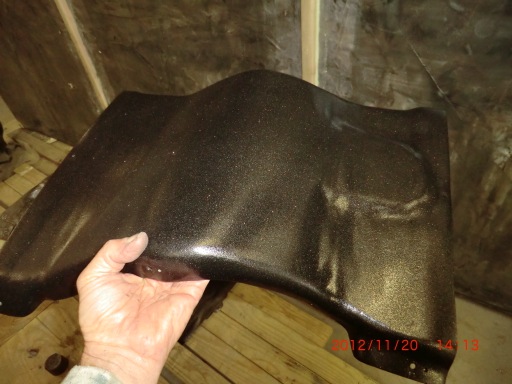
The push rods were painted crackle black which makes them stand out a bit. Once the baffles are installed, most of the push rod tubes will not be visible.

The inlet ducts were also painted crackle black. I wanted them to stand out and not look like regular glass. Yesterday, when I microed fuel probe area, I also filled the inlet ducts to smooth them out a little prior to painting.

The Stbd duct. I like how the gold rivets stand out on the black…

I am not going to install #2 and #4 cylinders until next Monday. My buddy Tony wants to learn how to replace a cylinder, so we will do it together in a week or so. It will cost him lunch at Aunt Bee’s.

The fuel probe installation has been microed and sanded. A little paint and you’ll never know they are there.
Mar
18
2010
After the trip to CA, I was really messed up for a last few days. I was extremely tired (time zone/daylight saving changes) when I got back, the back was bothering and the after affects of the dental work all hit me at the same time. Ouch! The trip to LA was just exhausting in many ways and I was sure glad to be sleeping in my own bed again. I guess a bunch of factors all hitting at the same time just caused me want to relax since my head just wasn’t into the game. I needed to do a lot of thinking and reflecting. Thank goodness for good friends to bounce ideas off of. Felt like doing absolutely nothing on the plane….
Today, I finally started feeling perky again, physically and mentally and decided to get back to work. I want to get this bird out of the shop, so Pat can enjoy it. He will really love the great flying characterists of canards. What a great community too.
Before the CA trip the inlet ducts were glassed. You can see the AL ring installed in the duct work of the STBD side to clamp the flex hose on after assembly.

The port side after glassing. There is much more room to work with on the port side than the stbd side. It is made a bit more bulky to allow the oil dip stick will penetrate this inlet duct.

After removing all the foam and glass and cutting them free I found I could get them on/off the engine with forward baffles installed! Great now I can rivet the inlets to the Al air boxes instead of screwing them on as originally planned (it will look and perform much better). Some more glass work is necessary for fine tuning and I’ll be done with them.